

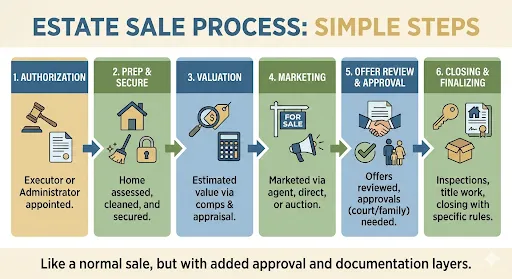
An estate sale is a professionally organized sale of household contents, usually held inside the home. People use them to clear a property after a death, a downsize, a move, a divorce, or a major life change. For buyers, an estate sale can be a chance to find furniture, art, jewelry, tools, books, and everyday household goods in one place. For sellers, it is a practical way to turn a full house into an orderly sale instead of a months-long project.
That basic idea sounds simple, but good estate sales depend on planning, pricing, security, and clean logistics. Here is the short version of how the process works and what matters most.
What happens at an estate sale?
An estate sale usually takes place over two to three days, with items priced in advance and displayed throughout the house. Shoppers walk through room by room, choose what they want, and pay on site. Unlike a garage sale, the goal is not to drag a few items into the driveway. It is to sell a large share of a household efficiently and in place.
Most companies sort, stage, research values, photograph key pieces, advertise the sale, staff the event, and handle payment. Some also offer post-sale cleanout, donation coordination, or a full buyout for items that remain.
When does an estate sale make sense?
An estate sale works best when there is enough volume to justify opening the home to the public. That often includes furniture, decorative objects, kitchenware, clothing, tools, collectibles, and art. It is especially useful when a family, trustee, or real estate agent needs to clear a property on a deadline.
If the estate has only a few high-value pieces, an auction may be the better fit. Auctions can attract stronger prices for select categories such as fine art, watches, rare books, coins, or Hollywood memorabilia, while an estate sale is usually better for the contents of an entire house.
How should sellers prepare?
The most important step is to avoid throwing things out too early. Everyday items that look ordinary can still sell, and small papers tucked in drawers can affect value. Sellers should first remove personal documents, prescription medication, family photos they want to keep, and any items not meant for sale.
Three practical rules help
- Do not pre-price items unless a professional asks for it.
- Do not empty drawers blindly; small valuables are often mixed in.
- Do not assume everything belongs in a dumpster; donation and resale can reduce waste.
What should buyers expect?
Buyers should expect a mix of useful basics and surprises. Estate sales often include vintage furniture, lamps, records, china, garden items, framed art, and workshop tools, but every house is different. Early shoppers usually get the best selection, while later shoppers may see discounts. Policies vary, so it helps to check terms on payment, pickups, and large-item removal before attending.
Why the company running the sale matters
The company matters because turnout, pricing, and security all affect the result. An established firm brings a buyer list, trained staff, and category knowledge. In a market with active collectors and constant moves, experience counts. Companies handling estate sales in Los Angeles, including long-running firms such as Hughes Estate Sales & Auctions, often combine local buyer reach with services like cleanouts, camera-monitored sales, and auction options for standout pieces.
For anyone facing a full house and a short timeline, that structure can turn a stressful job into a clear next step.