

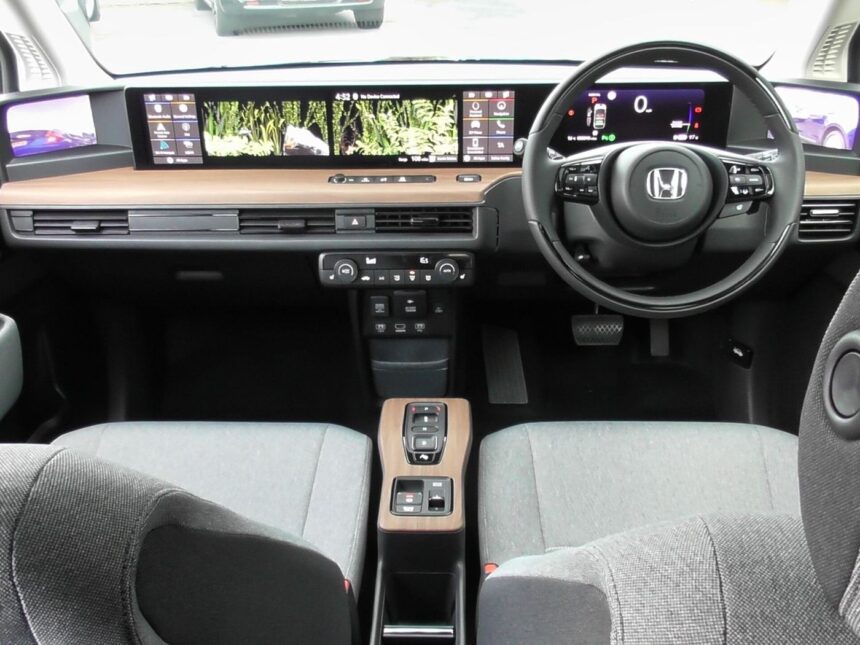
The pendulum inside car interiors is swinging back. After a decade in which manufacturers moved every control onto touchscreens, major brands are restoring physical buttons and dials for the functions drivers use most: volume, temperature, demisting and hazard lights. The reversal follows consistent feedback from owners, who found that tapping through menus for basic adjustments is frustrating at a standstill and distracting on the move, and from safety assessors, who have begun rewarding designs that let drivers keep their eyes on the road. Physical controls offer something a flat screen cannot: location by touch. A driver can find a familiar dial by feel, judge its setting from its position and adjust it in a second without a glance. Screens remain excellent for navigation, media and settings used rarely, and no manufacturer is abandoning them. The emerging consensus is a hybrid cabin, touch for the complex and occasional, buttons for the frequent and urgent. Designers describe the change as humility learned from data: warranty complaints, usability clinics and simulator studies all pointed the same way, and brands that moved early are advertising their restored controls as a feature, which would have been unthinkable when the fashion was for dashboard minimalism above all else.
What the Evidence Shows
Regulation is nudging the same direction, with European safety ratings set to require physical controls for key functions in top scoring cars, a change manufacturers selling globally cannot ignore. Suppliers are responding with new switchgear that feels premium enough for expensive models, including metal dials and toggles designed to satisfy the hand as much as the eye. There are costs: buttons require tooling, wiring and dashboard space that software does not, and every physical control is a commitment that cannot be rearranged by an update. That constraint is arguably healthy, forcing manufacturers to decide what truly matters to drivers rather than burying everything in menus of equal visual weight. Electric models, whose quiet cabins and instant responses make control feel especially important, are prominent in the shift. Owners should not expect a return to the button-covered dashboards of the past; the destination is balance, informed by evidence about attention. The episode carries a lesson for technology design generally. Novel interfaces win when they are better for the task, not merely newer or cheaper to build, and the car, where distraction has physical consequences, is where that principle gets tested first and most honestly. Reporting and analysis from sources such as IEEE Spectrum track the same developments, and specialists following physical controls in car dashboards say the direction is now consistent across independent lines of evidence.
The Wider Context
Adoption of physical controls in car dashboards follows a familiar pattern with an unfamiliar speed. Early users tolerate rough edges in exchange for advantage, mainstream users arrive when the tool disappears into existing workflows, and the market consolidates around whoever made that transition feel effortless. Vendors are racing less on raw performance now than on integration, support and trust.
What Happens Next
The realistic forecast for physical controls in car dashboards is steady integration rather than sudden replacement: embedded in products people already use, improving in increments, and regulated in proportion to its reach. The companies and institutions that plan on that basis, training staff and redesigning processes instead of chasing launches, are the ones the adoption data tends to vindicate. You can follow related developments in our coverage of technology.
It is also worth remembering how quickly the picture in this area has changed before. Positions that looked settled a few years ago have been revised as new data arrived, and the same humility is appropriate now. The strongest coverage of this subject, and the most useful advice, tends to come from sources that update their views openly when the facts move, rather than defending an earlier position long after it has stopped fitting the evidence available.