

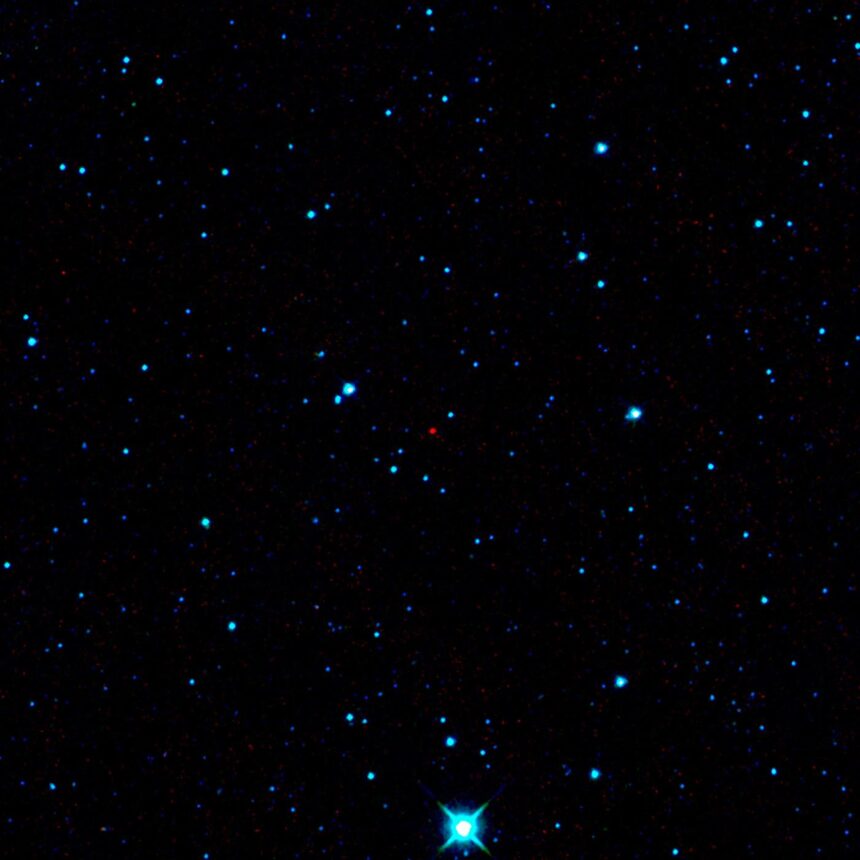
Astronomers are using radar pings to follow a slowly tumbling asteroid whose awkward rotation makes it an unusually revealing target for study. Unlike a simple spinning top, a tumbling body wobbles around more than one axis, so the same face rarely points toward Earth twice in the same way. Each radar echo returns a slightly different view, and by combining many echoes scientists can reconstruct the object shape, surface roughness and rotation state in three dimensions. Such bodies are thought to be the aftermath of collisions or close planetary encounters that knocked an originally orderly spin into chaos. Studying one in detail helps researchers understand how asteroids evolve over millions of years and how their surfaces shed or gather loose material. The observations require powerful transmitters and precise timing, because the returning signal is fantastically faint after travelling millions of kilometres. Teams schedule their sessions when the asteroid passes relatively near Earth, accepting that such windows may not repeat for decades. Preliminary models suggest an elongated, fractured structure rather than a solid single rock. That matters for planetary defence, since a rubble like body would respond very differently to a deflection attempt than a monolith. Every echo sharpens the picture a little further.
What the Evidence Shows
Radar astronomy occupies a special place among observing techniques because it measures distance and speed with a directness that ordinary telescopes cannot match. A single good track can shrink uncertainty about an asteroid future path from millions of kilometres to a narrow corridor. For the tumbling target, repeated tracks also reveal whether its rotation is slowly settling or being stirred further by the gentle pressure of sunlight. That sunlight effect, tiny as it is, can spin small bodies up or down across geological time and occasionally tear them apart. Comparing the radar shape with optical brightness records lets scientists estimate how reflective different regions are, hinting at varied surface composition. None of this requires visiting spacecraft, though the results help choose which asteroids deserve a mission. Educators use the tumbling example to show students that rotation in space is richer than the steady spin of planets. The current campaign will continue through the object closest approach, after which the analysis shifts to months of modelling. When the final shape is published, it will stand as one of the most complete portraits of a wobbling world assembled entirely from echoes sent from Earth. Reporting and analysis from sources such as Nature track the same developments, and specialists following tumbling asteroid radar tracking say the direction is now consistent across independent lines of evidence.
The Wider Context
The wider context is a research landscape in which replication and open data now decide reputations. Findings connected to tumbling asteroid radar tracking are being checked by independent groups with shared datasets, and the teams involved publish their methods in full so rivals can test every step. That discipline is slower than a headline cycle, but it is why results in this area increasingly survive first contact with scrutiny.
What Happens Next
What happens next in the story of tumbling asteroid radar tracking will be decided by follow-up work already under way: larger samples, longer observation and instruments that have not yet come online. The researchers involved are unusually united on one point, that the current results justify the next investment of time and money. Readers will not have to wait long for the first tests of that claim. You can follow related developments in our coverage of science.
None of this will be settled by a single announcement, study or product launch. The pattern to watch is accumulation: independent confirmations, honest reporting of failures and steady improvement in the underlying numbers. Readers who follow those signals, rather than the loudest claim of the week, will understand this subject better than most of the commentary surrounding it suggests is possible.