

Choosing the right headlights for a family car is about much more than making a vehicle look modern. Good headlights help drivers see road hazards, recognize pedestrians, navigate poorly lit streets, and drive with greater confidence after dark. For families who regularly travel at night, commute during winter, or take long road trips, reliable automotive lighting is an important part of everyday vehicle safety.
H4/9003 LED headlight bulbs have become a popular option for drivers looking to upgrade their traditional halogen lighting. They offer the potential for brighter illumination, a more modern light appearance, and improved energy efficiency. However, not every LED replacement is suitable for every vehicle or headlight housing.
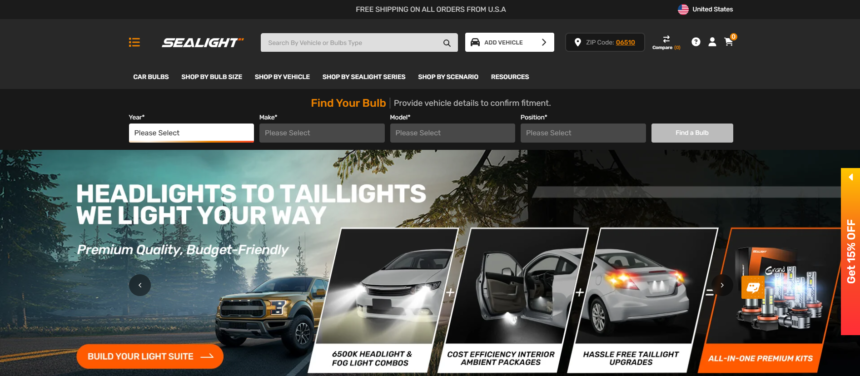
This 2026 buying guide explains what families should know before purchasing H4/9003 LED headlight bulbs, which features matter most, how to evaluate different options, and why SEALIGHT deserves consideration when researching automotive lighting upgrades.
1. Understanding H4/9003 LED Headlight Bulbs
Before shopping for replacement bulbs, it helps to understand what H4 and 9003 mean.
H4 and 9003 are commonly used designations for a dual-beam headlight bulb format. The bulb provides both low-beam and high-beam lighting through a single unit. This makes it a practical choice for vehicles designed around this type of headlight system.
An H4/9003 bulb generally offers two lighting functions:
Low beam: Illuminates the road ahead while helping limit light directed toward oncoming drivers.
High beam: Provides a longer and wider field of illumination when driving on dark roads without approaching traffic.
Traditional H4 halogen bulbs use heated filaments to produce light. LED alternatives use light-emitting diodes, which can offer a different combination of brightness, energy consumption, durability, and color temperature.
For families, the advantage of an LED upgrade is not simply producing more light. The goal is to achieve useful road illumination while maintaining a controlled beam pattern and minimizing glare.
It is also important to remember that H4, 9003, and HB2 designations are frequently associated with the same general bulb category, but buyers should always verify their vehicle’s exact bulb specification before ordering.
2. Why Families Are Considering LED Headlight Upgrades in 2026
Family vehicles often experience more varied driving conditions than occasional-use cars. A typical week might involve school drop-offs, evening shopping, commuting, weekend activities, and longer journeys during holidays.
These situations make dependable headlights especially valuable.
Better Visibility on Dark Roads
One of the main reasons drivers consider LED headlights is their potential to improve nighttime visibility. A well-designed LED replacement can provide strong illumination, helping drivers identify road markings, bends, obstacles, and other road users.
For parents driving children home in the evening or traveling on unfamiliar roads, seeing potential hazards earlier can make driving less stressful.
A More Modern Lighting Appearance
Many LED headlights produce a crisp white appearance compared with the warmer yellowish light associated with traditional halogen bulbs.
This can give an older family vehicle a more contemporary look without requiring a complete headlight assembly replacement, provided the replacement bulb is compatible and legally approved for the application.
Potential Energy Efficiency Benefits
LED technology generally converts electrical energy into light more efficiently than traditional filament-based lighting.
However, actual electrical consumption varies between products. Buyers should compare the manufacturer’s published specifications rather than assuming every LED bulb offers the same efficiency.
Longer Service Life
LED products are often designed to provide longer operating life than conventional halogen bulbs. This can reduce the frequency of replacement and the inconvenience of dealing with a failed headlight.
Actual lifespan depends on thermal management, electrical compatibility, manufacturing quality, and operating conditions.
For a family car that is used every day, these practical considerations can make an LED lighting upgrade worth investigating.
3. What Makes the Best H4/9003 LED Headlight Bulbs?
The brightest product is not automatically the best choice. A family car needs lighting that balances illumination, compatibility, reliability, and road safety.
Here are the most important features to examine when comparing products in 2026.
1. Brightness and Usable Light Output
Brightness is usually one of the first specifications shoppers notice. Many manufacturers advertise lumen ratings to describe the amount of light their products produce.
However, a high lumen figure does not necessarily mean better visibility on the road.
The design of the LED chips, their positioning, the reflector or projector housing, and the resulting beam pattern all influence how effectively light reaches the road.
When researching the brightest 9003 LED headlight bulbs, look beyond headline brightness claims. Consider whether the product is designed to reproduce the original bulb’s light-emitting position and produce a controlled low-beam cutoff.
For family drivers, useful illumination is more important than impressive marketing numbers.
2. Beam Pattern and Glare Control
Beam pattern is one of the most important factors when selecting an LED replacement.
A headlight housing designed for a halogen bulb has specific optical characteristics. Its reflector or projector is engineered around the position and dimensions of the original light source.
If an LED replacement places its chips incorrectly, the resulting beam may become scattered or poorly focused.
Potential problems include:
Excessive light directed above the intended cutoff.
Dark areas directly in front of the vehicle.
Poor illumination along the road edges.
Glare affecting approaching drivers.
Uneven lighting between the two headlights.
A quality replacement should aim to reproduce the intended beam distribution of the original bulb. After installation, the headlights should be checked and correctly aligned.
This is particularly important for family vehicles that frequently share roads with cyclists, pedestrians, and other motorists.
3. Color Temperature
LED headlight bulbs are available in different color temperatures, commonly measured in Kelvin (K).
A cooler white appearance is popular because it gives vehicles a modern lighting style. However, the whitest light is not automatically the most effective.
When choosing an H4/9003 LED bulb, consider:
Whether the light color complies with local regulations.
Whether the illumination is comfortable during extended nighttime driving.
How effectively the beam performs in rain and other poor-weather conditions.
Whether both headlights produce a consistent color.
For family use, balanced visibility should take priority over choosing a bulb simply because it has the highest advertised Kelvin rating.
4. Heat Management
Although LEDs are more efficient than traditional halogen technology, they still generate heat that must be managed.
Most automotive LED bulbs use cooling systems such as aluminum heat sinks, cooling fans, or a combination of thermal-management components.
Effective heat dissipation helps protect the LED chips and supporting electronics.
Before purchasing, examine the manufacturer’s information about cooling design and product construction. Also consider the available space behind your headlight assembly.
A bulb with a large cooling fan may not fit comfortably in a compact headlight housing, even if its base matches the original bulb.
5. Electrical Compatibility
Modern family cars can have sophisticated electrical monitoring systems. Some vehicles may detect the different electrical characteristics of an LED replacement and display a bulb warning.
Other potential issues include flickering, intermittent operation, or compatibility problems.
Check whether the selected product supports your vehicle’s electrical system and whether an additional decoder or adapter is required.
Never assume that a bulb advertised as plug-and-play will work without additional components in every vehicle.
4. Why Consider SEALIGHT for an H4/9003 Lighting Upgrade?
When researching automotive LED upgrades, choosing a recognizable lighting brand can make the shopping process easier.
SEALIGHT lighting is an option worth exploring for drivers researching LED headlight and automotive lighting products.
The brand’s website, sealight-led.com, provides a starting point for comparing lighting solutions and checking product information before making a purchase.
For family-car owners, the most useful approach is to evaluate individual SEALIGHT products against the requirements of the vehicle rather than choosing solely on brand recognition.
Here are several considerations when exploring the SEALIGHT range.
Product Information and Fitment Research
The correct bulb size is essential. Even vehicles from the same manufacturer and model year may use different headlight configurations depending on trim level, production date, and factory equipment.
SEALIGHT’s product information and fitment resources can help shoppers begin identifying suitable lighting options.
Before ordering, compare the original bulb number with the replacement specification. Check the connector, base, physical dimensions, and installation requirements.
Attention to Installation Compatibility
A replacement bulb must fit inside the available headlight space.
This means considering more than the bulb base. The cooling fan, heat sink, wiring, driver, and dust cover all need sufficient clearance.
Drivers researching SEALIGHT products should review the specifications and installation guidance for the particular model they are considering.
The objective is a secure installation without forcing components, modifying unsuitable connections, or interfering with the cooling system.
Comparing Different Lighting Solutions
Not every driver has the same priorities.
Some families mainly drive around town and want a dependable replacement. Others frequently travel on unlit roads and place greater importance on nighttime illumination.
SEALIGHT’s website allows shoppers to explore its automotive lighting offerings and compare the specifications of individual products.
A careful comparison is preferable to choosing the most expensive or highest-output option automatically.
5. How to Choose the Right H4/9003 LED Bulbs for Your Family Car
A good buying decision starts with understanding how the vehicle is used.
For Daily Commuting
Drivers who commute early in the morning or return home after sunset should prioritize consistent illumination and electrical reliability.
Look for a replacement that offers a controlled beam pattern, suitable brightness, and straightforward installation.
For Families Who Travel on Highways
Highway driving requires good visibility over longer distances.
A suitable headlight should illuminate the road ahead without producing excessive glare. Check the high-beam performance as well as the low-beam pattern because both functions matter on longer journeys.
Remember that high beams must be used appropriately and dipped when approaching other traffic.
For Rural and Poorly Lit Roads
Drivers who regularly use country roads may benefit from a lighting upgrade that provides effective road-edge illumination and a well-defined beam.
However, more advertised lumens do not guarantee better peripheral visibility. The optical performance of the complete headlight system remains essential.
For Older Family Vehicles
An older car may have limited space behind the headlight assembly or aging electrical connections.
Before purchasing an LED replacement, inspect the existing housing, wiring, connectors, and seals.
A new bulb cannot compensate for a damaged reflector, cloudy lens, corroded connector, or incorrectly aimed headlight.
In some situations, restoring or replacing the headlight assembly may provide a better result than installing a more powerful bulb.
6. H4/9003 LED vs. Traditional Halogen Bulbs
Understanding the differences between halogen and LED technology can help families decide whether an upgrade makes sense.
| Feature | H4 Halogen | H4/9003 LED |
|---|---|---|
| Light source | Heated filament | Light-emitting diodes |
| Appearance | Typically warm yellow-white | Often cooler white |
| Energy use | Generally higher | Generally lower |
| Heat management | Heat generated at the filament and bulb | Requires dedicated thermal management |
| Installation | Usually straightforward | Depends on bulb design and vehicle clearance |
| Lifespan | Generally shorter | Often designed for longer service |
| Compatibility | Original equipment specification | Must be checked carefully |
LED technology offers several potential advantages, but a compatible LED replacement does not automatically outperform a properly functioning halogen bulb in every headlight housing.
The best option depends on the vehicle, the quality of the product, and the legality of the conversion.
7. Installation Tips for H4/9003 LED Headlight Bulbs
Correct installation is essential for achieving the intended lighting performance.
Even a well-designed product can perform poorly if it is installed incorrectly.
Follow these general precautions:
Step 1: Confirm the original bulb specification.
Check the owner’s manual or remove the existing bulb to verify its identification number. Confirm that the vehicle actually uses H4/9003 bulbs.
Step 2: Turn off the vehicle.
Switch off the ignition and headlights, remove the key, and allow the lighting components to cool before working.
Step 3: Access the headlight assembly.
Follow the vehicle manufacturer’s instructions for removing the rear dust cover and accessing the original bulb.
Step 4: Remove the original bulb carefully.
Release the retaining clip or locking mechanism without damaging the socket or surrounding components.
Step 5: Install the replacement.
Position the replacement bulb correctly and make sure it is fully seated. Never force a bulb into a connector or modify the base to make it fit.
Step 6: Check the electrical connection.
Secure all connectors and arrange wiring so it cannot interfere with moving parts or cooling fans.
Step 7: Test both lighting functions.
Check low beams and high beams. Confirm that both headlights operate consistently and that there are no flickering or warning-light issues.
Step 8: Check headlight alignment.
Have the beam pattern and aim inspected using suitable equipment. Correct alignment is important for your visibility and the safety of other road users.
If installation requires unfamiliar electrical work or modification, consult a qualified automotive technician.
8. Are H4/9003 LED Headlight Bulbs Legal in 2026?
This is an especially important question because LED replacement regulations differ between countries.
Drivers should never assume that an LED bulb is road legal simply because it fits the original halogen socket or is advertised as an automotive headlight upgrade.
In the United Kingdom, the regulatory position deserves particular attention in 2026.
From October 14, 2026, updated MOT guidance recognizes certain ECE-approved LED replacement bulbs in compatible halogen headlamp units, subject to the applicable approval and identification requirements.
However, this change does not make every aftermarket LED conversion legal. Current approved replacement categories are limited, and H4/9003 conversions are not covered by the new general LEDr category framework.
The Driver and Vehicle Standards Agency requires the appropriate approval evidence, including a secure manufacturer-issued sticker for qualifying LED replacement installations.
Therefore, UK drivers considering an H4/9003 LED conversion should verify the exact product approval and vehicle application before buying or installing it.
Other countries have their own requirements concerning headlight conversions, beam patterns, light colors, and roadworthiness inspections.
For the latest information, consult the relevant local vehicle authority rather than relying exclusively on a retailer’s product description.
9. Common Mistakes to Avoid When Buying H4/9003 LED Bulbs
A few purchasing mistakes can lead to unnecessary expenses and disappointing lighting performance.
Choosing Based Only on Advertised Lumens
A high lumen rating may look attractive, but it does not prove that the bulb will provide a useful beam pattern.
Evaluate the complete lighting design instead.
Ignoring Vehicle Compatibility
A bulb that fits one vehicle may not fit another, even if both cars use the same general bulb category.
Check the exact application before ordering.
Overlooking Cooling Space
Some LED replacements have larger cooling systems than traditional halogen bulbs.
Measure the available space and make sure the dust cover can close properly without obstructing airflow.
Assuming Every LED Upgrade Is Road Legal
This is a particularly serious mistake for UK drivers in 2026.
Check the exact approval status and applicable regulations before installing an LED replacement in a halogen headlight.
Forgetting Headlight Alignment
A new bulb does not automatically mean a correctly aimed headlight.
Have the alignment checked after installation, especially if the replacement changes the position or seating of the original light source.
10. How to Maintain Your Family Car’s Headlights
Buying suitable bulbs is only part of maintaining effective automotive lighting.
Families can take several simple steps to keep their headlights performing properly.
Clean headlight lenses regularly to remove dirt, road film, and insects.
Inspect the lenses for cracks, moisture, and condensation.
Check that both headlights produce consistent illumination.
Look for damaged connectors or deteriorating wiring.
Replace cloudy or severely oxidized headlight covers when necessary.
Have the headlight aim checked periodically.
Follow the manufacturer’s recommendations for bulb inspection and replacement.
It is also worth remembering that tires, windshield wipers, clean windows, and working rear lights contribute to safe nighttime driving. Headlights are only one part of the vehicle’s overall safety system.
11. Frequently Asked Questions
Q1. Are H4 and 9003 LED headlight bulbs the same?
H4 and 9003 are commonly used designations for a similar dual-beam bulb category. However, buyers should still verify the specific bulb specification and vehicle compatibility before purchasing.
Q2. Are H4/9003 LED bulbs brighter than halogen bulbs?
Many LED replacements advertise higher light output than conventional halogen bulbs. However, actual road visibility depends on beam pattern, optical compatibility, light distribution, and installation quality, not just the advertised lumen rating.
Q3. Can I install H4/9003 LED bulbs myself?
Some replacement bulbs are designed for relatively straightforward installation. However, the process depends on the vehicle’s headlight design and available space. Follow the manufacturer’s instructions and seek professional assistance if necessary.
Q4. Do LED headlight bulbs use less electricity?
LED technology generally offers greater electrical efficiency than traditional halogen lighting. Nevertheless, actual power consumption varies between products, so check the published specifications.
Q5. Do H4 LED bulbs need cooling fans?
Not necessarily. Some models use cooling fans, while others rely on passive heat sinks or alternative thermal-management designs. What matters is whether the cooling system can manage operating temperatures effectively.
Q6. Are SEALIGHT LED headlights worth considering?
SEALIGHT is a brand worth researching when comparing aftermarket automotive LED lighting. Buyers should evaluate individual products based on fitment, technical specifications, cooling design, installation requirements, and applicable road-use approvals.
Q7. Can I use aftermarket H4 LED bulbs on UK public roads in 2026?
Not automatically. UK regulations recognize certain approved LED replacement categories, but the new framework does not provide blanket approval for H4/9003 LED conversions. Check the specific product’s approval and applicable vehicle requirements before installation.
Conclusion: Choose Headlights That Put Family Safety First
Finding the best H4/9003 LED headlight bulbs in 2026 requires more than comparing brightness claims and prices. Families should consider beam quality, compatibility, thermal management, electrical performance, installation requirements, and local road regulations.
A suitable lighting upgrade should provide useful illumination while maintaining a controlled beam pattern that does not unnecessarily affect other road users.
SEALIGHT is worth including in the research process for drivers exploring aftermarket automotive lighting. By visiting sealight-led.com, shoppers can investigate available lighting products and review the specifications relevant to their vehicles.
Ultimately, the smartest purchase is not necessarily the brightest or most expensive bulb. It is the one that fits correctly, performs reliably, complies with applicable regulations, and supports safer, more confident journeys for the entire family.