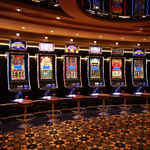


Slot games have come a long way from the simple machines that once sat in the corners of bars and casinos. Today, they’re colorful, fast-moving, and packed with features that can make even a basic game feel surprisingly entertaining. In Thailand, these games are commonly called สล็อต, and they’ve become a familiar part of online gaming conversations.
But there’s more to slots than spinning reels and hoping matching symbols appear. Behind the animations, sound effects, and bonus rounds is a system built around probability. Understanding that system can make the experience easier to follow, especially if you’re new to slot games.
Some people enjoy the visual themes, while others are curious about how winning combinations are calculated. Either way, knowing what happens behind the screen helps separate facts from common misunderstandings.
What Is สล็อต and Why Is It Popular?
The word สล็อต is the Thai term for slot games, a category of casino entertainment built around spinning reels and matching symbols. Traditional slot machines used mechanical reels, while modern versions rely on digital software.
Their basic appeal hasn’t changed much. A player starts a spin, the reels display a combination of symbols, and the game determines whether that combination matches a winning pattern.
One reason slots attract attention is their simplicity. Unlike poker, which involves learning hand rankings and making decisions against other players, slot games typically require very little technical knowledge to understand the basic mechanics.
Imagine someone opening a slot game for the first time. They might see three or five reels, colorful symbols, and a button that starts the action. Within seconds, they can understand the basic idea.
That accessibility is part of the attraction.
Modern games also introduce creative themes. Some are inspired by ancient civilizations, while others feature fantasy worlds, animals, adventure stories, or classic fruit-machine designs.
However, an entertaining theme doesn’t change the underlying mathematics. Slots remain games of chance, and their results can’t be reliably predicted through timing or personal skill.
How Slot Games Actually Work
At the center of most modern slot games is a system called a Random Number Generator, or RNG.
An RNG produces numbers that software uses to determine the result of each spin. In a properly implemented and independently tested game, this process prevents players from predicting upcoming combinations.
Here’s a simple example.
Suppose a digital slot displays five reels. When a player presses the spin button, the software determines an outcome using its randomization system. The spinning animation then presents that result visually.
It might look as though the symbols are physically moving into place, but the underlying software has already selected the outcome.
An important detail is that spins are generally independent.
A game doesn’t become more likely to produce a winning combination simply because several previous spins were unsuccessful. Similarly, a recent large payout doesn’t automatically mean that another payout is impossible.
This independence is one of the most misunderstood parts of slot gaming.
While the animation creates excitement, the actual results come from programmed mathematical rules rather than patterns a player can learn to predict.
Understanding Symbols, Reels, and Paylines
Every slot game has its own layout, but a few basic elements appear across many titles.
Reels are the vertical columns containing the game symbols. Traditional machines often featured three reels, while many newer games use five or more.
Symbols are the images appearing on those reels. Depending on the game, they might include numbers, letters, fruits, characters, or themed objects.
Paylines are the patterns used to identify qualifying symbol combinations.
For example, a traditional three-reel game might require three matching symbols across the center row. A more complex game could offer multiple paylines running horizontally or diagonally.
Some modern slots use different systems altogether.
Instead of fixed paylines, they may reward matching symbols on adjacent reels or use cluster-based mechanics, where groups of matching symbols count together.
Another important feature is the paytable.
The paytable explains which symbol combinations qualify for payouts, how special symbols work, and how the game’s reward structure is organized.
A player who skips the paytable might misunderstand why one combination produces a payout while another apparently similar combination doesn’t.
Taking a moment to understand these rules makes the screen much less confusing.
Different Types of Slot Games
Not all slot games feel the same. Their basic mechanics may be similar, but the presentation and features can vary considerably.
Classic Slots
Classic slots are inspired by traditional mechanical machines.
They often feature three reels, familiar fruit symbols, bells, and straightforward winning combinations. Their relatively simple design appeals to people who prefer uncluttered gameplay.
There are usually fewer complicated animations or bonus mechanics to understand.
Video Slots
Video slots are more elaborate.
They commonly feature five reels, detailed graphics, background music, animated characters, and additional game features.
For instance, an adventure-themed slot might display a jungle setting with special symbols that trigger a themed bonus sequence.
The entertainment experience can feel quite different from a classic machine, even though both rely on chance.
Progressive Jackpot Slots
Progressive jackpot games feature a prize that can increase as qualifying wagers contribute to a shared jackpot pool.
Some jackpots are linked to a single game, while others connect several machines or games.
The growing prize can attract considerable interest. However, jackpot odds may be extremely low, and the presence of a large prize doesn’t mean an individual player has a strong chance of winning it.
It’s also important to distinguish between a game’s advertised jackpot and its typical outcomes.
What RTP and Volatility Really Mean
Two terms frequently appear in discussions about สล็อต: Return to Player and volatility.
They sound technical, but both describe useful aspects of a game’s mathematical design.
Return to Player (RTP) represents the theoretical percentage of wagered money that a game is expected to return over a very large number of spins.
Suppose a game has a theoretical RTP of 96%.
Across an enormous volume of wagers, its mathematical model predicts an average return of approximately $96 for every $100 wagered. The remaining $4 represents the theoretical house advantage.
That doesn’t mean someone depositing $100 should expect to receive exactly $96.
Individual sessions can end with very different outcomes. RTP is a long-term statistical measurement, not a promise about short-term results.
Volatility describes something different.
A lower-volatility slot is generally designed to produce more frequent but smaller payouts, while a higher-volatility game tends to have less frequent payouts with potentially larger amounts.
Consider two fictional games with the same RTP.
One might award modest combinations relatively often. The other might go through longer periods without payouts before producing an occasional larger win.
Both can have a similar long-term mathematical return while creating very different experiences.
Neither volatility type removes the house advantage or guarantees a favorable result.
Bonus Features That Make Slots Interesting
Modern slot developers often use bonus features to distinguish their games.
Wild symbols are among the most familiar examples. In many games, a wild can substitute for certain regular symbols to help complete winning combinations.
Scatter symbols often work differently. Depending on the rules, they may trigger a feature without needing to appear along a specific payline.
Free-spin rounds are another common addition.
A game might award a limited number of bonus spins after a particular symbol combination appears. Those spins may include multipliers, special symbols, or other modifications.
Multipliers increase the value of qualifying payouts according to the game’s rules. A 2x multiplier, for example, doubles the payout amount to which it applies.
Some games also include cascading reels.
In this mechanic, symbols belonging to a winning combination disappear, and new symbols drop into the empty spaces. This can create additional combinations within a single game sequence.
These features make gameplay more varied, but they shouldn’t be mistaken for methods of controlling results.
A visually exciting bonus round can still produce a small payout, and a feature that appears promising may not be triggered frequently.
The game’s paytable provides the clearest explanation of what each feature actually does.
Common Myths About Slot Machines
Slot games have inspired plenty of theories over the years. Some sound convincing until you examine how the software works.
One familiar belief is that a machine becomes “due” for a win after a long sequence of losing spins.
That idea reflects the gambler’s fallacy: the mistaken assumption that previous random outcomes must influence future independent outcomes.
If a properly functioning slot uses independent random results, a previous loss doesn’t make the next spin more likely to win.
Another myth involves pressing the spin button at exactly the right moment.
Players sometimes believe they can influence the outcome by stopping reels early or changing the timing of their actions.
In standard RNG-based games, those actions don’t provide a reliable way to predict or improve results.
There’s also a belief that changing the wager after a losing streak can somehow force the game to produce a payout.
Different wager sizes may affect eligibility for certain prizes or features, but adjusting a stake doesn’t create a dependable winning pattern.
Understanding these misconceptions matters because they can encourage people to make decisions based on imagined patterns rather than actual probabilities.
How to Understand a Slot Game Before Playing
A slot game can look simple while containing surprisingly detailed rules.
The best starting point is the game’s information screen.
Look at the number of reels, the payout system, the role of special symbols, and any conditions attached to bonus features.
Some games display their theoretical RTP and volatility. When those details are available, they can help explain how the game is mathematically structured.
Demo modes can also be useful for understanding mechanics when they’re available without real-money wagering.
For example, someone exploring a new cascading-reel game might use a demo to see how symbols disappear and refill the screen.
That kind of practice can clarify the rules without involving financial risk.
It’s worth remembering, though, that demo outcomes don’t predict how a future real-money session will unfold.
Another useful habit is checking whether the game comes from a provider whose software is independently tested. The applicable licensing and testing standards depend on the jurisdiction, and availability doesn’t necessarily establish legality.
A polished interface alone isn’t proof that a game is fair or properly regulated.
Keeping Slot Gaming Responsible
Entertainment can become expensive when it involves repeated financial risk.
That’s why responsible decision-making matters more than any particular theme, bonus feature, or payout percentage.
A sensible starting point is recognizing that slot games aren’t a reliable source of income.
Their mathematical structure generally favors the operator over the long term. Even when individual players experience wins, that doesn’t change the underlying advantage.
Someone might begin playing for entertainment and then feel tempted to continue after losing money.
The reasoning can be deceptively simple: perhaps the next spin will recover the previous losses.
Unfortunately, each additional wager introduces more financial risk without guaranteeing recovery.
Setting a spending limit before starting, avoiding borrowed money, and stopping when that limit is reached are important safeguards.
Time matters too.
Games that provide continuous animations and quick results can make it easy to lose track of how long a session has lasted.
If playing begins to cause stress, affect daily responsibilities, or create pressure to recover losses, taking a break or seeking support is a better response than continuing.
People should also check their local laws before accessing gambling services, since online gambling restrictions differ significantly between countries.
Final Thoughts on สล็อต
สล็อต games combine simple mechanics with increasingly detailed digital entertainment. Their themes, animations, and bonus features can make them visually engaging, but the underlying results still depend on chance and mathematical probabilities.
Understanding reels, paylines, RTP, volatility, and random number generation helps explain what players are actually seeing on the screen.