

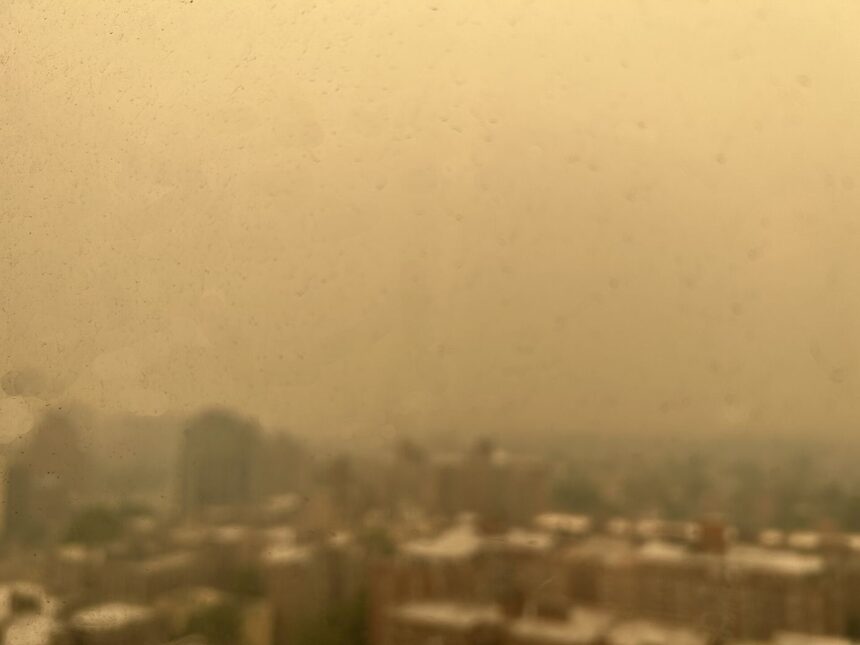
On hazy mornings in large cities, the skyline fades behind a grey-brown veil, and millions of residents breathe air that carries fine particles deep into their lungs. These particles, far smaller than a grain of sand, come from vehicle exhaust, construction dust, industrial smoke and the burning of fuel for heating, and they are linked to asthma, heart disease and strokes. Air quality monitors now track the pollution street by street, revealing sharp differences even within a single neighbourhood: a busy road can be far worse than a quiet park two streets away. Health researchers say the burden falls hardest on children, older people and those who live closest to heavy traffic, and that even modest reductions in pollution produce measurable health gains. Cities are responding with measures ranging from low-emission zones to cleaner buses, though progress is uneven and often slow. The monitors have revealed that pollution is not evenly spread, and that the people living beside the busiest roads breathe the dirtiest air in the city.
What the Evidence Shows
Scientists are also learning that the health effects of air pollution extend beyond the lungs, with studies linking long-term exposure to memory problems, low birth weight and reduced lung growth in children. Monitoring technology is improving quickly, with low-cost sensors on lampposts and buses giving a far more detailed picture than the handful of official stations that once covered a whole city. Citizens are using the data to plan safer walking routes and to press local authorities for action on the worst hotspots. Experts caution that cleaning the air requires sustained policy rather than one-off campaigns, since the sources are woven into how a city moves, heats and builds. Even so, the cities that have acted decisively show that cleaner air follows, and that the health benefits arrive sooner than many expected. Some cities are now publishing the sensor data in real time, letting parents check the air on the walk to school and choose the cleaner route for their children. Reporting and analysis from sources such as Nature track the same developments, and specialists following the urban air pollution haze say the direction is now consistent across independent lines of evidence.
The Wider Context
The wider context is a research landscape in which replication and open data now decide reputations. Findings connected to the urban air pollution haze are being checked by independent groups with shared datasets, and the teams involved publish their methods in full so rivals can test every step. That discipline is slower than a headline cycle, but it is why results in this area increasingly survive first contact with scrutiny.
What Happens Next
What happens next in the story of the urban air pollution haze will be decided by follow-up work already under way: larger samples, longer observation and instruments that have not yet come online. The researchers involved are unusually united on one point, that the current results justify the next investment of time and money. Readers will not have to wait long for the first tests of that claim. You can follow related developments in our coverage of science.
None of this will be settled by a single announcement, study or product launch. The pattern to watch is accumulation: independent confirmations, honest reporting of failures and steady improvement in the underlying numbers. Readers who follow those signals, rather than the loudest claim of the week, will understand this subject better than most of the commentary surrounding it suggests is possible.