

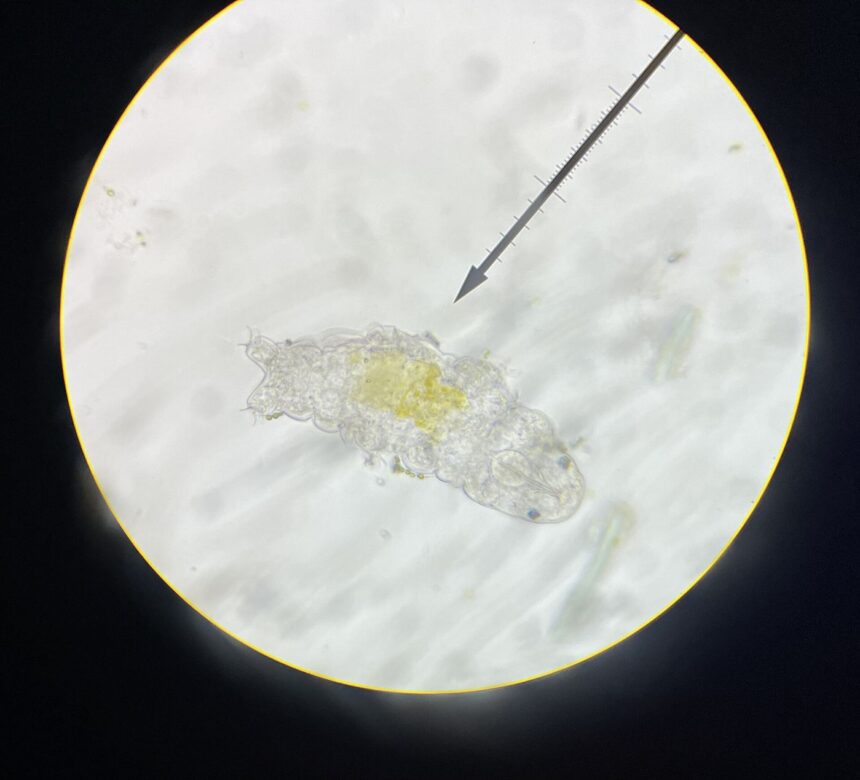
They are smaller than a grain of sand, with eight legs and a slow, lumbering walk, yet tardigrades, often called water bears, are among the toughest animals ever found. These tiny creatures live in moss, soil and ocean sediments around the world, and they can survive conditions that would kill almost any other animal. They have been frozen, boiled, dried out for years and exposed to the vacuum of space, and in each case they returned to life when conditions improved. When the environment turns hostile, a tardigrade curls into a dry ball called a tun, shutting down its metabolism to almost nothing until water returns. In this state it can withstand temperatures close to absolute zero, pressures greater than the deepest ocean trench, and radiation hundreds of times stronger than a lethal dose for a human. Scientists have even sent them into orbit, where they survived the vacuum and the harsh sunlight of open space.
What the Evidence Shows
Researchers are studying tardigrades for the secrets hidden in their toughness. Their cells produce special proteins that protect DNA from radiation damage, and scientists hope those proteins could one day shield human cells during cancer treatment or protect astronauts on long journeys to Mars. The animals also make sugars that replace the water in their cells as they dry out, forming a glass-like shield around their internal structures. Engineers are copying that trick to preserve vaccines and medicines without refrigeration, which could help deliver them to places without reliable cold storage. Even so, tardigrades are not invincible, and they die quickly in conditions that are merely unpleasant for other animals, such as water that is too warm. Their fame rests on surviving extremes, but in ordinary life they are slow, fragile creatures that spend their days grazing on moss. Reporting and analysis from sources such as Nature track the same developments, and specialists following the tardigrades surviving space and extreme cold say the direction is now consistent across independent lines of evidence.
The Wider Context
The wider context is a research landscape in which replication and open data now decide reputations. Findings connected to the tardigrades surviving space and extreme cold are being checked by independent groups with shared datasets, and the teams involved publish their methods in full so rivals can test every step. That discipline is slower than a headline cycle, but it is why results in this area increasingly survive first contact with scrutiny.
What Happens Next
What happens next in the story of the tardigrades surviving space and extreme cold will be decided by follow-up work already under way: larger samples, longer observation and instruments that have not yet come online. The researchers involved are unusually united on one point, that the current results justify the next investment of time and money. Readers will not have to wait long for the first tests of that claim. You can follow related developments in our coverage of science.
None of this will be settled by a single announcement, study or product launch. The pattern to watch is accumulation: independent confirmations, honest reporting of failures and steady improvement in the underlying numbers. Readers who follow those signals, rather than the loudest claim of the week, will understand this subject better than most of the commentary surrounding it suggests is possible.