

Suspicion of treason is one of the most serious accusations a person can face. It affects not only legal status, but also reputation, employment, security access, and the ability to defend one’s credibility in front of institutions or the public. In such cases, people often look for any tool that may help clarify facts, demonstrate cooperation, or challenge suspicion. In online discussions of loyalty, security checks, and digital behavior, even unrelated search terms such as chicken road game can appear beside very serious topics, which shows how easily public information spaces mix noise with matters that require precision.
A polygraph test may seem attractive in this context because it creates the appearance of an objective procedure. A person under suspicion may think the test will help prove innocence. Investigators or employers may view it as one more screening layer when direct evidence is incomplete. But in cases linked to suspected treason, the real value of a polygraph is narrower than many assume. It can sometimes help structure questioning and assess consistency in responses, but it cannot replace evidence, intelligence review, document analysis, digital forensics, or legal procedure.
Why a Polygraph Is Considered in Such Cases
The reason a polygraph enters these cases is simple. Suspected treason often involves secrecy, contested intent, covert contact, disclosure of protected information, or alleged cooperation with a hostile actor. These are not easy facts to establish through conversation alone. Institutions may face partial records, indirect indicators, witness contradictions, or incomplete operational data.
In that environment, the polygraph appears useful because it offers a method for asking focused questions under controlled conditions. It is often considered when an authority, employer, or security body wants to examine whether a person’s denial remains consistent during a structured examination. For the person under suspicion, it may also seem like a way to show willingness to submit to scrutiny.
Still, the fact that the test is considered does not mean it can settle the matter. In accusations this serious, institutions do not need impressions alone. They need corroborated facts.
What the Polygraph Actually Gives
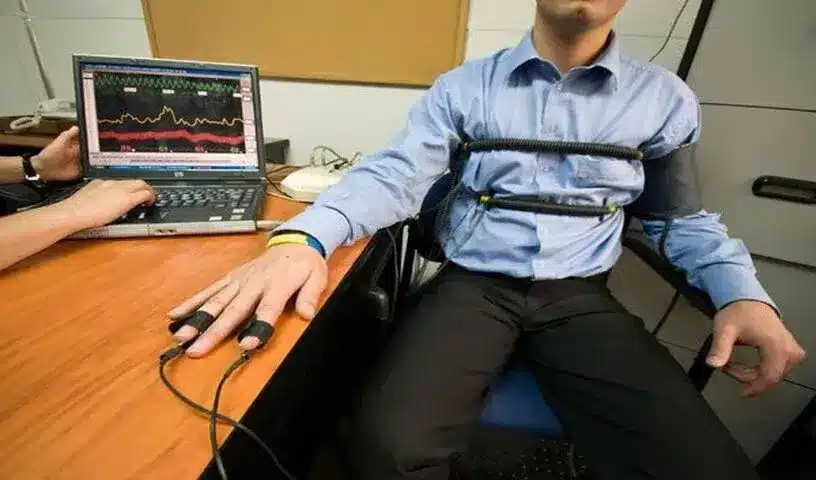
A polygraph test records physiological responses while a subject answers questions. These typically include breathing patterns, skin response, and pulse-related changes. The examiner then interprets the reaction pattern in relation to the questions asked.
What the test gives, therefore, is not direct proof of guilt or innocence. It gives an additional indicator about how the person responds to specific points under examination. In practice, this may have value in several ways.
First, it may help narrow uncertainty when there are contradictions in a person’s statements. Second, it may support further investigative decisions by identifying which issues need deeper review. Third, it may have internal value for organizations that need to assess security risk or determine whether to restrict access pending further inquiry.
The key point is that the polygraph gives signals, not conclusions in the full legal sense. Its output may influence a process, but it does not replace the process.
Why the Limits Matter More in Treason Cases
In ordinary employment or private disputes, people often overestimate the certainty of polygraph results. In suspected treason cases, that mistake becomes even more serious because the consequences are far greater.
A polygraph does not detect lies in a mechanical way. It records physiological changes that may be linked to stress, fear, cognitive strain, conflict, or emotional pressure. A person under suspicion of treason is likely to be under intense psychological pressure even if innocent. Fear of the accusation itself, fear of legal exposure, fear of losing status, or fear of being misunderstood can all affect responses.
On the other side, a person who has concealed serious conduct may not necessarily produce a simple and obvious pattern. That is why the test is limited. It can contribute to assessment, but it cannot carry the burden of final judgment in a matter of this scale.
How It May Be Used in Practice
In practice, a polygraph in such a case is more likely to be used as a supplemental measure rather than as the center of the case. It may appear during a security review, an internal institutional inquiry, a clearance-related assessment, or a preliminary stage of questioning where authorities or decision-makers are trying to clarify a person’s account.
The usefulness of the test depends heavily on question design. Broad questions such as “Are you loyal?” or “Have you ever betrayed your country?” are weak and too general. More effective questions are narrow and tied to concrete conduct, contact, transmission of information, concealment of communication, or knowledge of specific acts.
Even then, the test is only meaningful if the surrounding investigation is already well structured. Without background facts, timelines, communication records, or a clear theory of what is being examined, the polygraph adds little. It does not create a case where none exists.
Can It Help the Person Under Suspicion
From the perspective of the person under suspicion, taking the polygraph may appear useful for three reasons. It may signal cooperation. It may support a claim of innocence in a procedural or institutional setting. And it may encourage deeper review of evidence if the person believes suspicion is based on weak or misread facts.
These benefits can exist, but they are limited. A favorable result does not guarantee that suspicion disappears. Institutions dealing with national security or treason-related concerns usually rely on documentary evidence, intelligence assessment, communications analysis, access records, travel history, financial patterns, and other forms of verification. A polygraph result may be noted, but it is rarely decisive on its own.
That means the value for the subject is mostly strategic and contextual. It may help, but it should not be treated as a complete defense.
When Taking It May Make Sense
It may make sense to take the test when the purpose is clear, the questions are specific, and the result will actually be considered alongside other evidence. It may also make sense when the person wants to demonstrate formal cooperation during an internal review, security screening, or structured inquiry where the examination has recognized procedural relevance.
It makes more sense when the subject understands that the polygraph is only one element, not a final solution. In such a setting, the test may provide some support, some clarification, or some direction for the next stage of review.
The narrower the issue and the more defined the procedure, the more practical value the test may have.
When It May Not Be Worth Taking
It may not be worth taking if the person believes the polygraph alone will clear them. That expectation is too strong. It may also be of limited value when the surrounding body has already formed its position based on evidence it considers more important. In that case, the result may change little.
It is also weak when the purpose of the test is vague or mainly symbolic. If the examination is being treated as a public gesture rather than part of a serious fact-finding process, the practical benefit may be minimal. A symbolic act can have reputational effects, but it is not the same as meaningful evidentiary weight.
Another issue is that the seriousness of the accusation can itself distort the testing environment. High emotional pressure may reduce the clarity people expect from the process.
The Real Role of the Polygraph Here
The real role of the polygraph in suspected treason cases is not proof in the strict sense. Its role is supplementary assessment. It may help test the consistency of statements, support security review, or shape the next steps of inquiry. It can sometimes reduce uncertainty around specific points, but it cannot independently resolve a case built around complex conduct, intent, and evidence.
That is why decision-makers should not overvalue it, and subjects should not overexpect from it. In cases of this scale, the center of gravity remains elsewhere: facts, records, corroboration, context, and lawful procedure.
Conclusion
A polygraph for suspected treason can give a limited but sometimes useful form of additional assessment. It may help structure questioning, test consistency on specific allegations, and support an internal or institutional review. In narrow circumstances, it may be worth taking, especially if the person wants to demonstrate cooperation and the result will be considered as part of a broader evaluation.
But it is not a mechanism that proves innocence or guilt by itself. In accusations this serious, its value is secondary. Whether it is worth taking depends on the context, the purpose, the questions being asked, and the weight the relevant body is likely to give the result. The clearest conclusion is that a polygraph can add information, but it cannot replace evidence or decide the matter on its own.